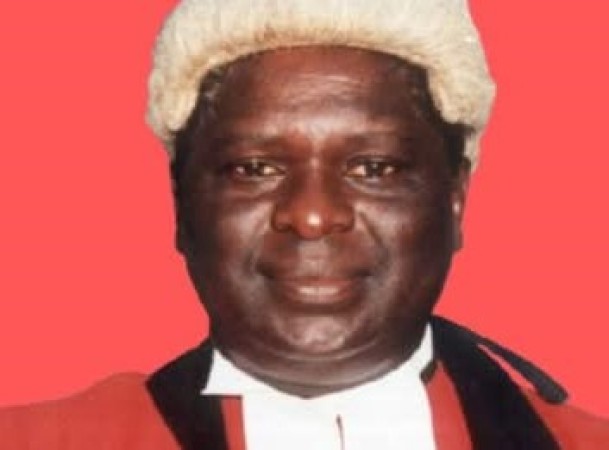
The Rise, Trials and Quiet Exit of Defining Judicial Figure Justice Omondi Tunya
Jul 09, 2026
The death of Retired High Court Judge Godfrey Omondi Tunya marks the end of a complex and consequential chapter in Kenya’s judicial history.
He passed away on Sunday, July 5, 2026, at a Nairobi hospital after a prolonged illness — closing a life defined by ambition, controversy and an unshakeable presence in the country’s courtrooms for more than three decades.
Born in 1949 in the former South Nyanza, Justice Tunya’s journey into the Judiciary began soon after he earned his Bachelor of Laws degree in 1973. He joined the bench in 1974 as a District Magistrate, beginning a steady climb through the ranks at a time when Kenya’s legal system was tightly intertwined with the politics of the day.
By 1982, he had become a Senior Resident Magistrate. Five years later, he rose to Principal Magistrate, and in 1990, he was appointed Nairobi Chief Magistrate — a position that placed him at the center of some of the most politically sensitive cases of the one party era under President Daniel arap Moi.
It was during the late 1980s and early 1990s that Justice Tunya became a household name. His courtroom handled cases involving suspected members of the underground Mwakenya movement — an opposition network accused of challenging the KANU government.
Working alongside then prosecutor Bernard Chunga, he issued lengthy prison sentences in cases that drew national attention and shaped public perceptions of the Judiciary during a tense political period.
To supporters of the government, he was a firm and decisive judicial officer. To critics, he symbolized a Judiciary struggling to assert independence in an era of political pressure. Either way, Justice Tunya’s rulings left an imprint on Kenya’s legal and political landscape.
His elevation to the High Court capped a long career, but his exit from the Judiciary was as dramatic as some of the cases he presided over.
In October 2003, he was among the judges named in the Integrity and Anti Corruption Committee report led by Justice Aaron Ringera — the “radical surgery” that sought to purge unethical conduct from the bench. Like several colleagues, he opted to retire with benefits rather than face a disciplinary tribunal, leaving the allegations against him untested and his legacy suspended between achievement and controversy.
The purge itself was later criticized for its sweeping approach, adding another layer of ambiguity to the circumstances of his departure.
Yet beyond the headlines and political undertones, colleagues remember Justice Tunya as a man who devoted more than 30 years to the Judiciary — a disciplined officer who rose through every rank available to him, and who carried the weight of Kenya’s evolving judicial history on his shoulders.
His death closes a chapter that was as influential as it was complicated. Justice Omondi Tunya leaves behind a legacy woven with service, controversy, and the unmistakable imprint of a man who stood at the center of Kenya’s justice system during some of its most defining moments.